
Post
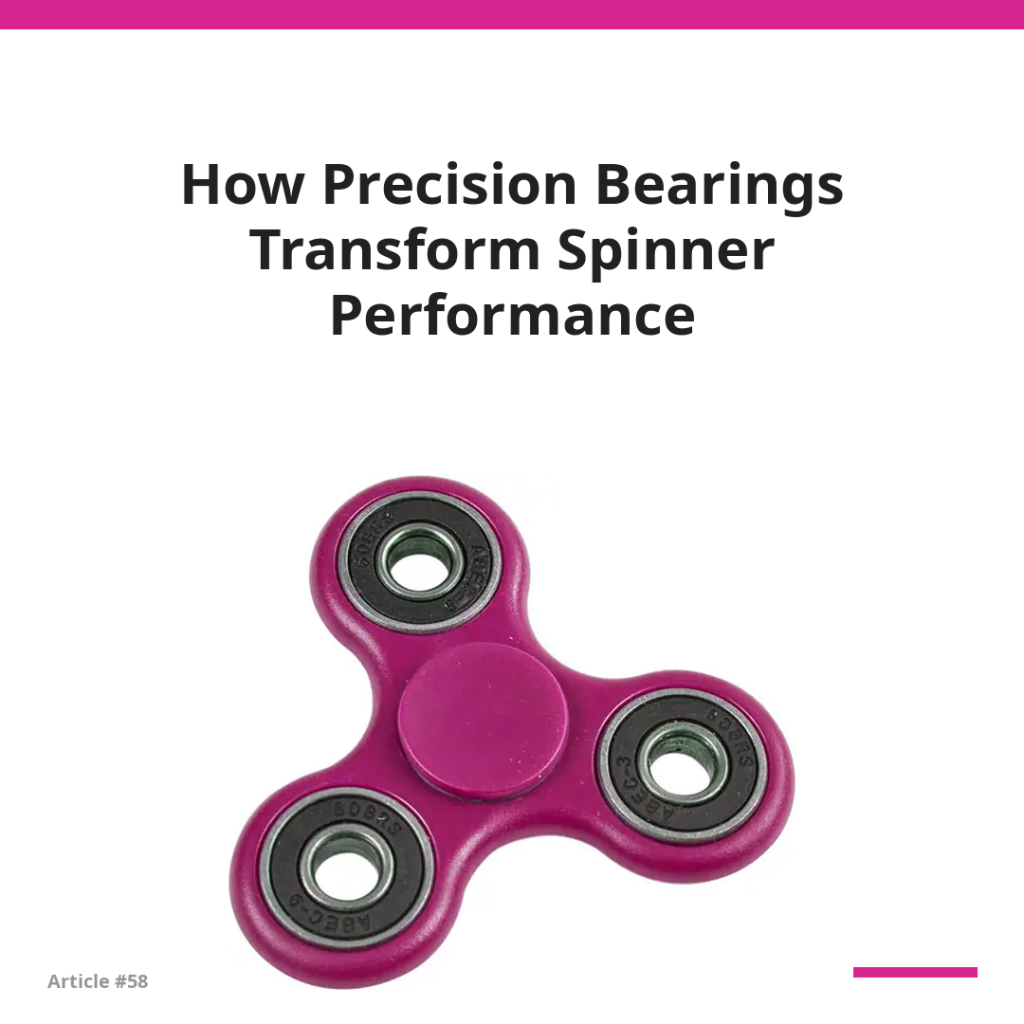
How Precision Bearings Transform Spinner Performance
May
 Precision Bearings in Fidget Spinners: 7 Ways They Transform Performance
 Precision Bearings in Fidget Spinners: 7 Ways They Transform Performance
Introduction: Why Precision Bearings Matter in Fidget Spinners
In the world of premium fidget spinners, few components are more important than the bearing system. While materials, weight, and industrial design all influence the overall experience, the bearing ultimately determines how a spinner feels, sounds, performs, and responds during use. For enthusiasts and collectors, the quality of a bearing can completely transform a spinner from an average desk toy into a highly refined tactile instrument.
Modern fidget spinners have evolved far beyond their early plastic designs. Today’s luxury spinner market focuses heavily on engineering precision, mechanical smoothness, and sensory satisfaction. At the center of this evolution lies the development of precision bearings that dramatically improve:
- Spin duration
- Stability
- Smoothness
- Acoustics
- Responsiveness
- Overall tactile quality
A precision bearing may appear small, but it acts as the mechanical heart of the entire spinner. Every rotation, vibration, sound, and tactile sensation depends on how effectively the bearing minimizes friction and maintains balance during movement.
This article explores how precision bearings transform spinner performance, why enthusiasts care so deeply about bearing quality, and how modern engineering continues pushing spinner technology toward increasingly refined levels of performance.
What Are Precision Bearings in Fidget Spinners?
A bearing is the rotating mechanism located at the center of a spinner. It allows the outer body to
rotate smoothly around a fixed axis with minimal friction.
Precision bearings are manufactured with:
- tighter tolerances
- smoother raceways
- higher-quality materials
- improved balance
- better consistency
Compared to standard bearings, precision bearings produce:
- smoother spinning
- reduced wobble
- quieter operation
- longer spin times
- superior tactile feedback
In premium fidget spinners, the bearing often determines whether the spinner feels luxurious or inexpensive.
How Precision Bearings Improve Spin Smoothness
One of the biggest differences users notice immediately is smoothness.
High-quality precision bearings reduce microscopic imperfections inside the rotating system. This creates:
- cleaner motion
- less vibration
- more fluid rotation
- improved stability
A smooth spinner feels effortless in the hand. Instead of roughness or resistance, the motion becomes:
- buttery
- controlled
- refined
- consistent
This smoothness contributes heavily to the calming and satisfying sensory experience that spinner enthusiasts value so highly.
Why Precision Bearings Increase Spin Time
Long spin duration is one of the most recognized benefits of premium bearings.
Precision bearings reduce friction between moving components, allowing the spinner to rotate more efficiently for extended periods.
Factors affecting spin time include:
- bearing tolerance
- lubrication quality
- material hardness
- cleanliness
- balance accuracy
Higher-end bearings can dramatically outperform cheaper alternatives because they waste less energy during rotation.
Although long spin time is not the only measure of quality, it often reflects superior engineering and manufacturing precision.
The Role of Precision Bearings in Spinner Stability
Poor-quality bearings often create:
- wobbling
- inconsistent movement
- vibration
- unstable rotation
Precision bearings improve rotational stability by maintaining tighter mechanical alignment during spinning.
This stability creates:
- better balance
- more comfortable handling
- improved finger control
- smoother tricks and transitions
For enthusiasts who value tactile refinement, stability is often more important than maximum spin duration alone.
A stable spinner feels premium because the movement appears controlled and intentional rather than chaotic.
Why Acoustics Matter in Premium Fidget Spinners
Sound plays a surprisingly important psychological role in spinner enjoyment.
Different bearings produce distinct acoustic signatures:
- soft whispering sounds
- smooth metallic hums
- ceramic ringing tones
- silent rotation
Precision bearings improve acoustic consistency by minimizing:
- rattling
- scraping
- irregular vibration
- harsh friction noise
Some users prefer:
- quiet office-friendly bearings
while others enjoy:
- louder ceramic feedback
- mechanical resonance
- tactile sound textures
The relationship between sound and tactile satisfaction has become an important aspect of luxury spinner culture.
Steel Bearings vs Ceramic Bearings
The debate between steel and ceramic bearings remains one of the most discussed topics in the spinner community.
Steel Bearings
Steel bearings are known for:
- smoother feel
- quieter operation
- easier maintenance
- better consistency
They are often preferred for:
- office environments
- everyday carry
- balanced tactile performance
Many users consider steel bearings more practical for daily use.
Ceramic Bearings
Ceramic bearings offer:
- lower friction
- higher spin speeds
- louder acoustic feedback
- reduced weight
However, they may also:
- feel noisier
- require more maintenance
- become less forgiving in dusty environments
Some enthusiasts love ceramic bearings because they create highly energetic spinning characteristics and distinct sound profiles.
Bearing Tolerances and Manufacturing Quality
Precision manufacturing dramatically affects spinner performance.
High-end bearings are created using:
- advanced CNC machining
- microscopic polishing
- tighter dimensional tolerances
- specialized heat treatment
Small imperfections invisible to the eye can significantly influence:
- rotational smoothness
- vibration
- friction
- balance
Luxury spinner manufacturers often invest heavily in premium bearings because experienced users can immediately feel the difference.
The Importance of Bearing Cleaning and Maintenance
Even the best precision bearing loses performance if neglected.
Dust, lint, moisture, and oil contamination can reduce:
- smoothness
- spin time
- stability
- acoustic quality
Proper maintenance may include:
- occasional cleaning
- lubrication control
- dust protection
- careful storage
Many enthusiasts develop maintenance routines similar to watch collectors or mechanical keyboard hobbyists.
A clean precision bearing often feels dramatically smoother and more satisfying.
Hybrid Bearings and Future Innovations
Modern spinner engineering continues evolving rapidly.
Hybrid bearings combine:
- steel raceways
- ceramic balls
- specialized coatings
These systems attempt to balance:
- smoothness
- durability
- acoustic control
- speed
- stability
Future innovations may include:
- magnetic stabilization
- advanced ceramic composites
- aerospace-grade materials
- self-lubricating systems
As the luxury spinner market matures, bearing technology will likely become even more sophisticated.
The Psychological Impact of Smooth Mechanical Motion
Humans naturally respond positively to smooth and predictable mechanical interaction.
A high-quality precision bearing creates:
- sensory satisfaction
- calming motion
- tactile consistency
- rhythmic feedback
This psychological response explains why premium spinners often feel:
- relaxing
- addictive
- comforting
- mentally engaging
Smooth rotational behavior provides subtle sensory stimulation that many users associate with stress reduction and improved focus.
Precision Bearings and Everyday Carry Culture
EDC enthusiasts value tools that combine:
- functionality
- durability
- craftsmanship
- tactile excellence
Precision bearings elevate fidget spinners into legitimate EDC accessories because they improve:
- reliability
- sensory quality
- long-term durability
- user experience
A well-built spinner with premium bearings becomes more than a novelty item. It becomes a carefully engineered tactile tool suitable for:
- office work
- commuting
- creative thinking
- relaxation
This alignment with EDC values has helped premium spinners gain stronger recognition among collectors and enthusiasts.
Why Enthusiasts Upgrade Bearings
Many spinner owners eventually experiment with bearing upgrades.
Reasons include:
- improving smoothness
- changing acoustic profiles
- increasing spin duration
- reducing vibration
- customizing tactile feel
Different bearings create dramatically different sensory experiences even within the same spinner body.
For enthusiasts, bearing swapping becomes part of the hobby itself.
This customization culture reflects the growing sophistication of the spinner community.
The Relationship Between Weight and Bearings
Spinner weight strongly interacts with bearing performance.
Heavier materials such as:
- brass
- copper
- tungsten
place different demands on bearings compared to:
- aluminum
- titanium
- plastic
Precision bearings help maintain:
- rotational balance
- momentum control
- smooth handling
even under heavier loads.
This is especially important for luxury spinners that prioritize tactile richness and rotational stability.
How Precision Bearings Influence Long-Term Ownership
High-quality bearings contribute significantly to long-term satisfaction.
A premium spinner with excellent bearings often:
- ages gracefully
- maintains performance
- feels reliable
- develops emotional value
Many enthusiasts continue using favorite spinners for years because the smooth mechanical interaction remains satisfying over time.
The durability and consistency of precision bearings help transform spinners from temporary gadgets into cherished everyday carry tools.
Why Precision Engineering Defines Luxury Spinners
Luxury products are often defined by details invisible to casual users.
In fidget spinners, precision bearings represent one of those hidden details.
Two spinners may appear visually similar, but the internal engineering can create dramatically different experiences.
Premium bearings contribute to:
- superior refinement
- tactile elegance
- mechanical confidence
- sensory depth
This attention to precision engineering separates true luxury spinners from mass-produced alternatives.
Conclusion
Precision bearings are the foundation of high-performance fidget spinners. They influence nearly every aspect of the spinning experience, including smoothness, balance, acoustics, stability, and tactile satisfaction. While casual users may focus primarily on appearance, experienced enthusiasts understand that bearing quality ultimately determines how refined and enjoyable a spinner feels in daily use.
As spinner technology continues evolving, precision engineering and advanced bearing systems will remain central to the future of premium spinner design. From ceramic hybrids to aerospace-grade manufacturing, innovations in bearing technology are transforming fidget spinners into sophisticated tactile instruments appreciated by collectors, professionals, and EDC enthusiasts alike.
In the end, a precision bearing does far more than help a spinner rotate. It transforms mechanical movement into a deeply satisfying sensory experience that combines craftsmanship, psychology, and engineering in a remarkably compact form.
