
Post
Dual Bar Fidget Spinner vs Triple Arm Spinner: 7 Key Differences You Need to Know
May
Introduction: Understanding Modern Fidget Spinner Design
The world of premium fidget spinners has evolved far beyond the simple plastic toys that first became popular years ago. Today’s spinner market includes highly engineered designs built with precision bearings, premium metals, ergonomic balancing, and advanced industrial aesthetics. Among the most common and debated designs are the dual bar fidget spinner and the triple arm spinner.
Both styles offer unique advantages, and each has developed a loyal following within the spinner community. While some users prefer the streamlined simplicity and smooth momentum of dual bar designs, others appreciate the visual symmetry and stability of triple arm spinners. Choosing between them depends heavily on personal preference, tactile expectations, portability needs, and intended daily use.
Modern fidget spinners are now commonly used for:
- Stress relief
- Focus enhancement
- Workplace productivity
- Everyday carry (EDC)
- Sensory stimulation
- Mechanical enjoyment
Because spinner ergonomics and balance significantly affect the overall experience, understanding the differences between dual bar and triple arm designs is essential before making a purchase.
This article explores the key differences between dual bar fidget spinners and triple arm spinners, including:
- Spin dynamics
- Ergonomics
- Portability
- Balance
- Noise levels
- Tactile feel
- Long-term usability
By understanding how each design behaves, users can choose the spinner style that best fits their personal preferences and lifestyle.
What Is a Dual Bar Fidget Spinner?
A dual bar spinner typically features:
- Two weighted ends
- A straight symmetrical body
- Central bearing placement
This design creates a clean, minimalist structure focused on rotational momentum and streamlined handling.
Dual bar spinners are often associated with:
- Longer spin times
- Smooth momentum
- Simpler aesthetics
- Compact ergonomics
Many premium enthusiasts appreciate dual bar spinners for their refined mechanical feel and comfortable pocket carry.
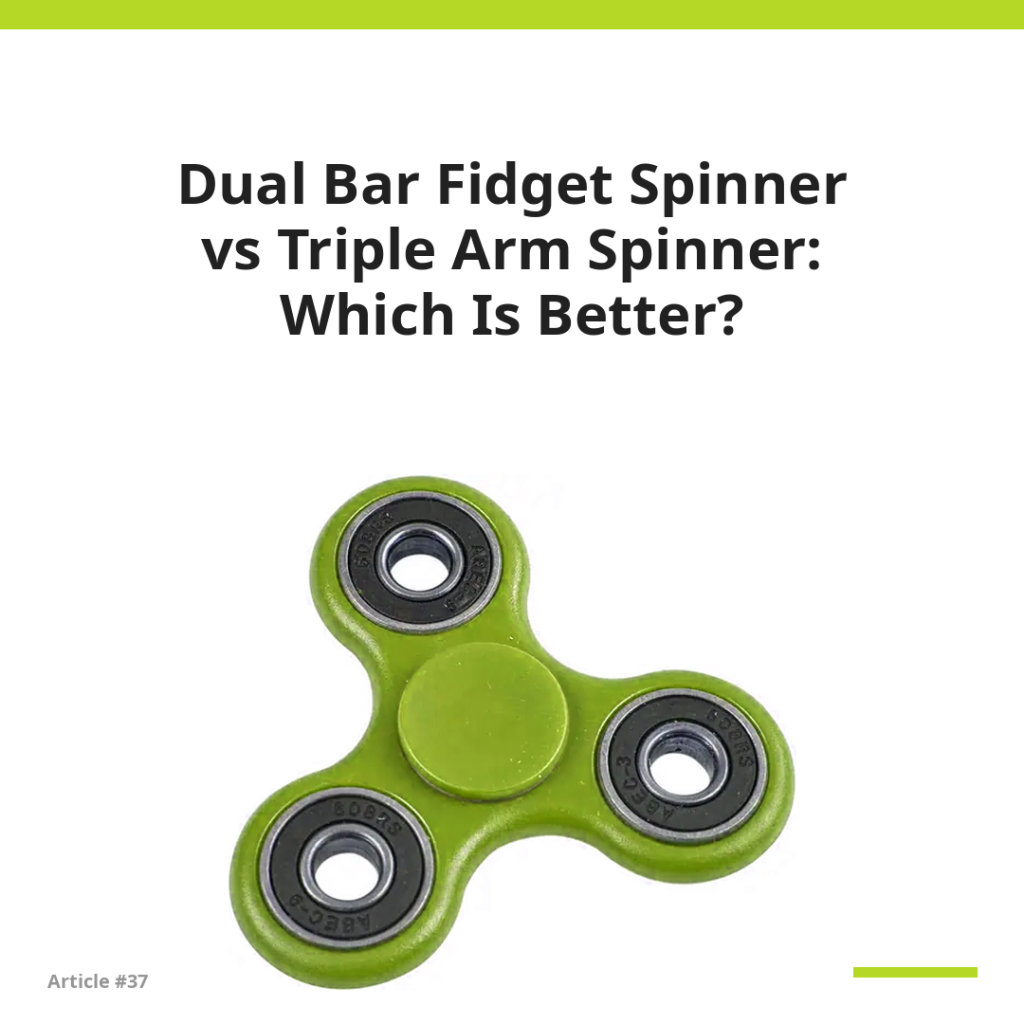
What Is a Triple Arm Spinner?
A triple arm spinner features:
- Three evenly spaced arms
- Triangular rotational symmetry
- Balanced multi-point weight distribution
This design became the most recognizable spinner shape during the early popularity boom.
Triple arm spinners are known for:
- Stable spinning
- Easy launching
- Visual symmetry
- Balanced rotational behavior
Many beginners find triple arm spinners intuitive and comfortable because their evenly distributed mass creates highly predictable movement.
Dual Bar Fidget Spinner vs Triple Arm Spinner: Spin Dynamics
One of the biggest differences between these spinner styles is rotational behavior.
Dual Bar Spinners
Dual bar designs often produce:
- Longer spin times
- Stronger momentum
- More pronounced gyroscopic feel
- Smoother directional rotation
Because the weight is concentrated at two opposing points, the spinner can generate powerful rotational inertia.
Many enthusiasts describe dual bar spinners as:
- More fluid
- More mechanical
- More satisfying during extended spins
Triple Arm Spinners
Triple arm spinners typically feel:
- More balanced
- More stable
- Easier to control
- Less aggressive in motion
The evenly distributed weight reduces wobble and creates smoother stability during casual spinning.
This makes triple arm designs especially beginner-friendly.
Portability and Everyday Carry
Portability matters greatly for users who carry spinners daily.
Dual Bar Spinner Advantages
Dual bar spinners are often:
- Slimmer
- More pocket-friendly
- Easier to carry
- Less bulky
Their streamlined shape fits naturally into:
- pockets
- organizer pouches
- desk setups
- EDC kits
This makes them popular among professionals and minimalists.
Triple Arm Spinner Advantages
Triple arm spinners may feel:
- Larger
- Wider
- More visually noticeable
While some compact versions exist, many triple arm designs occupy more pocket space.
However, their shape often provides:
- easier finger launching
- stable desk spinning
- comfortable casual handling
Ergonomics and Hand Comfort
Ergonomics strongly influence long-term spinner enjoyment.
Dual Bar Ergonomics
Dual bar spinners often provide:
- Narrow grip profiles
- Smooth directional control
- Comfortable finger rolling
- Strong tactile momentum
Many users enjoy the focused rotational feel during:
- stress relief
- concentration sessions
- extended spinning
Triple Arm Ergonomics
Triple arm spinners generally feel:
- More stable in the hand
- Easier for beginners
- Less sensitive to grip technique
Their symmetrical structure creates balanced finger pressure during spinning.
This often reduces learning curve and improves casual usability.
Noise and Acoustic Behavior
Spinner acoustics significantly affect workplace usability.
Dual Bar Spinners
Because dual bar designs often spin faster and with stronger momentum, they may produce:
- more noticeable airflow
- stronger bearing acoustics
- sharper rotational feedback
Premium silent-bearing systems can minimize this significantly.
Triple Arm Spinners
Triple arm spinners often feel:
- softer acoustically
- smoother in vibration
- quieter during moderate spinning
Their balanced structure can reduce aggressive rotational noise.
This makes them appealing for:
- offices
- meetings
- shared workspaces
Visual Appeal and Industrial Design
Aesthetics are an important part of spinner culture.
Dual Bar Designs
Dual bar spinners typically emphasize:
- minimalist design
- industrial elegance
- clean geometry
- mechanical simplicity
Many luxury spinner manufacturers favor dual bar formats because they showcase:
- precision machining
- premium metals
- refined engineering
Triple Arm Designs
Triple arm spinners offer:
- iconic spinner appearance
- visual symmetry
- playful aesthetics
- dynamic rotation visuals
Some users simply enjoy the classic recognizable spinner silhouette.
Which Spinner Has Better Spin Time?
Spin time depends on:
- bearing quality
- weight distribution
- material density
- machining precision
However, dual bar spinners often achieve:
- longer spin duration
- stronger rotational momentum
because the weight is concentrated farther from the center.
Triple arm spinners may sacrifice some spin duration in exchange for:
- smoother stability
- easier balance
- predictable handling
For enthusiasts focused purely on long spin performance, dual bar designs are often preferred.
Which Spinner Is Better for Beginners?
For beginners, triple arm spinners are usually easier to learn.
Their balanced structure provides:
- stable launching
- easier handling
- predictable motion
- forgiving ergonomics
New users often feel comfortable with triple arm designs immediately.
Dual bar spinners sometimes require:
- more controlled finger technique
- greater balance awareness
but many enthusiasts eventually prefer their more refined mechanical feel.
Material Choice Matters More Than Shape Alone
Spinner shape is important, but material quality also dramatically affects performance.
Premium materials include:
- Stainless steel
- Titanium
- Brass
- Copper
- Tungsten
These materials influence:
- momentum
- tactile feel
- durability
- acoustics
- ergonomic comfort
A well-machined premium spinner will generally outperform a poorly constructed spinner regardless of shape.
Workplace Performance and Spinner Choice
Different workplace environments favor different spinner styles.
Dual Bar Spinners for Professionals
Professionals often prefer dual bar spinners because they:
- look more refined
- fit discreetly in pockets
- complement minimalist desk setups
- provide strong tactile satisfaction
Triple Arm Spinners for Casual Use
Triple arm spinners often feel:
- more approachable
- easier to share
- visually engaging
- beginner-friendly
Their stable handling works well for casual daily use.
Community Preferences and Enthusiast Culture
The spinner community remains divided on which design is superior.
Some enthusiasts prefer dual bar spinners because of:
- momentum
- industrial aesthetics
- mechanical feel
- longer spin times
Others prefer triple arm designs for:
- stability
- comfort
- classic appearance
- smoother handling
Ultimately, spinner preference becomes highly personal over time.
Many collectors eventually own both styles for different situations and moods.
Which Spinner Is Better for Stress Relief?
Both designs can effectively support stress relief.
Dual Bar Stress Relief Experience
Dual bar spinners often provide:
- stronger gyroscopic feel
- more tactile momentum
- immersive spinning sensation
Triple Arm Stress Relief Experience
Triple arm spinners often feel:
- calmer
- smoother
- more balanced
- easier to handle casually
The best option depends on whether the user prefers:
- powerful rotational feedback
or - softer stable movement
Conclusion
The debate between dual bar fidget spinners and triple arm spinners ultimately comes down to personal preference, intended use, and tactile expectations. Dual bar spinners generally offer longer spin times, stronger momentum, slimmer ergonomics, and more refined industrial aesthetics. Triple arm spinners provide balanced stability, beginner-friendly handling, visual symmetry, and smoother casual operation.
Both designs have earned respected positions within modern spinner culture because they deliver different types of tactile satisfaction and sensory engagement. Whether you prioritize portability, workplace discretion, long spin performance, or balanced comfort, understanding these differences helps you choose the spinner style that best supports your daily routines and personal preferences.
In the end, neither design is universally superior. The best spinner is the one that feels most comfortable, satisfying, and enjoyable in your own hands.
