
Post
Fidget Spinners and Tactile Focus Tools: 10 Psychological Benefits for Productivity
May
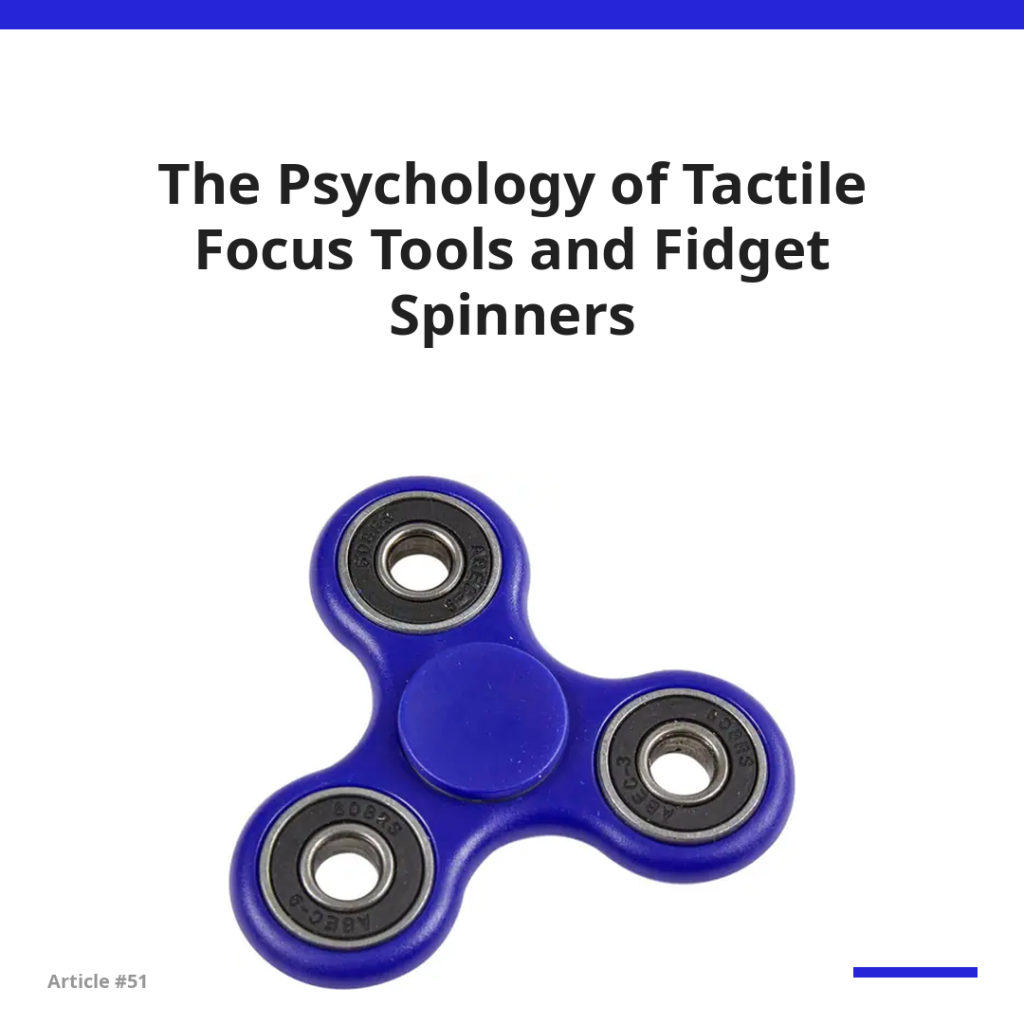
The Psychology of Tactile Focus Tools and Fidget Spinners
Introduction: How Fidget Spinners Relate to Brain Movement and Focus
Human beings are constantly interacting with their environment through movement and touch. Even during moments of concentration, many people unconsciously tap their fingers, shake their legs, click pens, adjust objects on their desks, or play with small items in their hands. These repetitive physical behaviors are so common that most people barely notice them. However, psychologists and behavioral researchers have long recognized that these actions are not random habits without purpose. Instead, they often serve important cognitive and emotional functions.
In recent years, tactile focus tools such as fidget spinners, stress cubes, worry stones, magnetic sliders, and mechanical desk toys have become increasingly popular because they provide structured sensory stimulation in a controlled and satisfying way. Among these tools, the fidget spinner emerged as one of the most recognizable symbols of modern tactile productivity culture.
While early public perception often dismissed fidget spinners as temporary novelty toys, deeper research and community experience have revealed a more complex reality. Many users report genuine improvements in:
- Focus
- Stress management
- Emotional regulation
- Mental clarity
- Productivity
- Relaxation
This growing recognition has transformed tactile tools into legitimate accessories for students, professionals, programmers, creatives, and individuals seeking healthier ways to manage modern cognitive overload.
This article explores the psychology behind tactile focus tools and fidget spinners, examining why repetitive movement affects the human brain, how sensory engagement influences attention, and why these simple devices continue to resonate so strongly in today’s increasingly digital world.
The Brain’s Relationship with Movement
The human brain is deeply connected to physical movement. Even small motions stimulate neural systems associated with:
- Attention
- Emotion
- Motor control
- Sensory processing
- Cognitive regulation
Movement and cognition are not isolated processes. Instead, they continuously interact with one another.
This is why many people think more clearly while:
- Walking
- Tapping fingers
- Doodling
- Handling objects
- Repeating small physical motions
These activities provide low-level sensory stimulation that can help regulate mental energy and maintain cognitive engagement during repetitive or mentally demanding tasks.
Fidget spinners work within this psychological framework by offering repetitive tactile interaction that occupies restless physical impulses without significantly interfering with mental focus.
Why People Fidget During Concentration
Fidgeting is often misunderstood as a sign of distraction or impatience. In reality, controlled fidgeting can sometimes help individuals maintain attention rather than lose it.
Psychologists suggest that repetitive movement may:
- Prevent under-stimulation
- Regulate alertness
- Reduce nervous energy
- Improve sensory balance
- Maintain cognitive engagement
For some individuals, especially during long periods of sitting or concentration, complete stillness can actually reduce mental performance.
Small tactile actions may help the brain remain:
- Alert
- Calm
- Engaged
- Emotionally balanced
This explains why many students and professionals naturally seek physical stimulation during mentally demanding activities.
Tactile Feedback and Sensory Regulation
One of the most important psychological concepts behind fidget tools is tactile feedback.
Tactile feedback refers to the physical sensations generated through touch and movement. Humans naturally respond strongly to:
- Texture
- Weight
- Temperature
- Motion
- Resistance
- Vibration
These sensory inputs influence emotional and cognitive states more than many people realize.
A well-designed fidget spinner provides multiple layers of tactile stimulation simultaneously:
- Smooth rotation
- Subtle vibration
- Momentum feedback
- Weight distribution
- Mechanical sound
- Finger pressure sensation
Together, these elements create a calming and satisfying sensory experience that many users find mentally regulating.
Stress Reduction Through Repetitive Motion
Repetitive motion has long been associated with relaxation and emotional regulation.
Examples include:
- Knitting
- Rocking chairs
- Meditation beads
- Hand exercises
- Repetitive breathing patterns
These actions often create rhythmic sensory experiences that reduce psychological tension.
Fidget spinners function similarly by offering repetitive physical interaction that can temporarily redirect anxious or restless energy into predictable motion.
This process may help:
- Lower stress perception
- Interrupt racing thoughts
- Reduce tension
- Create mental grounding
The rhythmic consistency of spinning can feel soothing because the brain often responds positively to predictable patterns and controlled sensory input.
Attention, Stimulation, and Cognitive Balance
The human brain constantly seeks an optimal balance between:
- Understimulation
- Overstimulation
Too little stimulation can produce:
- Boredom
- Mental wandering
- Loss of focus
- Fatigue
Too much stimulation can cause:
- Anxiety
- Cognitive overload
- Stress
- Emotional exhaustion
Tactile tools may help regulate this balance by providing controlled low-level stimulation that supports sustained attention without overwhelming the senses.
For some users, especially during repetitive office work or studying, a fidget spinner introduces just enough sensory engagement to help maintain mental alertness.
The Role of Habit and Ritual
Psychology also shows that humans are deeply influenced by routines and repetitive behaviors.
Over time, many spinner users develop personal rituals around their tactile tools:
- Spinning during brainstorming
- Using a spinner while reading
- Holding a spinner during meetings
- Carrying one during travel
These repeated associations create psychological conditioning.
Eventually, the spinner itself may become linked with:
- Concentration
- Calmness
- Productivity
- Familiarity
- Emotional comfort
This conditioning partly explains why long-term users often develop strong attachment to favorite spinners.
The object becomes psychologically associated with stability and focus.
The Importance of Physical Interaction in a Digital World
Modern life is increasingly dominated by screens and digital interactions.
People now spend countless hours:
- Typing
- Scrolling
- Watching
- Clicking
- Switching between applications
As physical interaction decreases, many individuals unconsciously seek tactile experiences to restore sensory balance.
Fidget spinners and tactile tools provide:
- Physical engagement
- Mechanical interaction
- Sensory grounding
- Non-digital stimulation
This physicality feels refreshing because it contrasts sharply with the abstract and often exhausting nature of digital environments.
The growing popularity of tactile tools may partially reflect a broader psychological desire for more direct sensory experiences in everyday life.
Why Mechanical Satisfaction Feels Rewarding
Humans are naturally attracted to mechanical systems and smooth physical interactions.
Many satisfying experiences involve:
- Clicking buttons
- Rotating knobs
- Operating watches
- Opening precision tools
- Engaging tactile controls
Well-designed spinners capitalize on this psychological preference by delivering:
- Smooth movement
- Consistent momentum
- Balanced rotation
- Mechanical precision
The brain often interprets smooth mechanical performance as rewarding because predictable sensory feedback creates feelings of control and satisfaction.
This explains why high-quality spinners feel dramatically more enjoyable than poorly balanced or cheaply made alternatives.
The Psychology of Flow States
A flow state refers to deep mental immersion in a task where attention becomes highly focused and distractions fade into the background.
Many professionals seek flow during:
- Programming
- Writing
- Designing
- Studying
- Strategic thinking
For some users, tactile tools may help support flow states by:
- Managing restless energy
- Reducing minor distractions
- Maintaining sensory engagement
- Encouraging concentration routines
While spinners themselves do not create productivity automatically, they can become part of psychological environments that support focused work habits.
Emotional Comfort and Familiar Objects
Humans often form emotional connections with frequently used physical objects.
Examples include:
- Favorite pens
- Watches
- notebooks
- keyboards
- pocket tools
Fidget spinners can develop similar emotional value over time.
Daily tactile interaction creates familiarity, and familiarity often generates:
- Comfort
- security
- predictability
- emotional grounding
This effect becomes especially strong with premium materials like brass or copper that visibly age and evolve through use.
The spinner gradually becomes personalized through wear, patina, and habitual interaction.
The Social Psychology of Fidget Tools
Fidget spinners also gained popularity because they became socially recognizable symbols of:
- modern stress management
- productivity culture
- desk setups
- everyday carry lifestyles
Communities formed around:
- spinner collecting
- industrial design appreciation
- machining quality
- bearing technology
- sensory preferences
This social dimension reinforces emotional engagement by connecting users with shared interests and experiences.
Community participation often deepens appreciation for tactile tools beyond their functional role alone.
Misconceptions About Fidget Spinners
Despite their popularity, fidget spinners are often misunderstood.
Some critics assume they:
- always distract users
- reduce productivity
- function only as toys
However, psychological effectiveness varies greatly depending on:
- individual personality
- sensory preferences
- environment
- usage habits
- task type
For some people, spinners genuinely improve concentration and stress management. For others, they may provide little benefit or become distracting.
The psychological impact is highly individualized.
Choosing the Right Tactile Tool
Different people respond to different forms of sensory feedback.
Some users prefer:
- smooth silent spinners
- heavier metal materials
- magnetic sliders
- clicking mechanisms
- textured surfaces
The best tactile tool is often the one that feels naturally satisfying without becoming disruptive.
Personal preference plays a major role in long-term effectiveness and enjoyment.
Industrial Design and Psychological Experience
Modern spinner manufacturers increasingly recognize the connection between industrial design and psychology.
Design choices affect:
- emotional response
- tactile satisfaction
- comfort
- stress perception
- sensory engagement
Features such as:
- rounded edges
- balanced weight
- premium materials
- smooth bearings
- quiet acoustics
all contribute to creating calming and rewarding user experiences.
This intersection of psychology and industrial design has helped elevate premium spinners into sophisticated lifestyle products.
The Future of Tactile Productivity Tools
As digital fatigue and workplace stress continue increasing, tactile focus tools may become even more relevant.
Future trends may include:
- advanced sensory design
- ergonomic optimization
- modular tactile systems
- therapeutic applications
- integration into wellness routines
The demand for simple, non-digital stress-management tools is likely to remain strong because human psychology still fundamentally values physical interaction and sensory grounding.
Conclusion
The psychology of tactile focus tools and fidget spinners reveals that these devices are far more meaningful than simple novelty gadgets. Human beings naturally seek movement, sensory stimulation, and physical interaction as part of emotional regulation and cognitive balance. Fidget spinners work because they channel restless energy into controlled, repetitive motion that can support focus, reduce stress, and create calming sensory feedback.
Through tactile engagement, rhythmic movement, and mechanical satisfaction, spinners provide many users with moments of grounding and concentration in increasingly overstimulating environments. Their popularity reflects broader psychological needs for sensory balance, mindfulness, and physical interaction in a world dominated by screens and constant mental demands.
Whether used for stress relief, concentration, creativity, or relaxation, tactile focus tools continue to demonstrate the powerful relationship between touch, movement, and the human mind.
