
Post
Ultimate Guide to CNC Machined Metal Spinner: Everything You Need to Know
May
The Geometry of Perfection: The CNC Machined Metal Spinner and the Science of Precision Manufacturing
I. Introduction: The Era of Digital Craftsmanship
CNC machining—Computer Numerical Control—is the gold standard of modern precision manufacturing. In this process, every cut, every surface, and every dimension is dictated by advanced computer software and executed by high-speed robotic milling tools to tolerances far beyond what human hands or traditional casting could ever achieve.
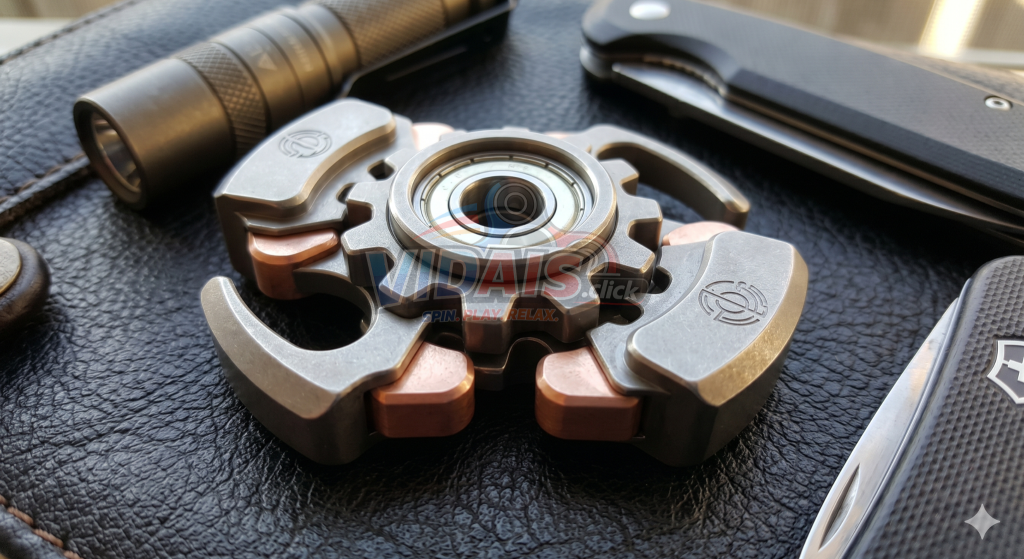
The CNC Machined Metal Spinner is a direct product of this high-technology environment. When you hold a CNC-machined object, the difference from conventionally manufactured alternatives is immediately apparent. The surfaces feel mathematically smooth. The edges are exactly right—neither too sharp nor too rounded. The geometry is flawless, reflecting a level of industrial integrity that defines the “Premium” category.
II. What Makes the CNC Machined Metal Spinner Special?
The CNC Machined Metal Spinner is defined by its mechanical honesty. There are no seams from molds and no inconsistencies from hand-pouring. Every unit is a carbon copy of an idealized digital blueprint.
Computer-Controlled Precision: We operate at tolerances as tight as ±0.005mm. For context, that is thinner than a human hair, ensuring a vibration-free spin.
Absolute Rotational Symmetry: CNC technology ensures that all three arms are identical to within microns. This perfect weight distribution is the secret to a whisper-quiet, stable rotation.
Superior Surface Integrity: Machined surfaces are consistent and dense, lacking the microscopic air bubbles (porosity) often found in cheaper die-cast spinners.
Complex Geometric Design: 5-axis CNC machines allow for “skeletonized” arms, internal chamfers, and deep-contoured surfaces that would be impossible to create with traditional tools.
Multi-Material Versatility: Our CNC centers are calibrated to work with everything from lightweight 6061-T6 Aluminum to the stubborn, high-strength resilience of Grade 5 Titanium.
III. The CNC Machining Process: From Billet to Bearing
Each CNC-machined spinner represents a significant investment in time, programming, and high-end equipment. The journey of a single spinner includes:
1. CAD/CAM Engineering
The process begins with a 3D model in Computer-Aided Design (CAD). We then program the “Toolpaths” in Computer-Aided Manufacturing (CAM) software, deciding exactly how the carbide drill bits will move across the metal.
2. Subtractive Manufacturing
We start with a solid “billet”—a pure block of raw metal—clamped securely into the machine’s vice. Over the course of 10 to 60 minutes, high-speed robotic arms carve away the excess metal. It is a process of “sculpting through subtraction,” where the unwanted material is stripped away to reveal the perfect form within.
3. 5-Axis Simultaneous Milling
Unlike traditional 3-axis machines, our 5-axis equipment can move the cutting tool across five different axes simultaneously. This allows us to create complex “undercuts” and sweeping organic curves that give the spinner an ergonomic, aerodynamic profile.
4. Dynamic Balancing and Final Inspection
Much like a high-performance car tire, each spinner is tested for balance. If one side is even 0.01g heavier due to material density variations, the machine adjusts the weight to ensure a “dead-flat” spin.
IV. Design Features and Technical Aesthetics
The aesthetic of a CNC-machined tool is inherently technical, industrial, and “clean.”
Skeletonization: Internal cutouts reduce the overall weight while keeping the mass at the tips of the arms. This maximizes the Moment of Inertia (MoI), leading to longer spin times and a more powerful gyroscopic feel.
Chamfered Edges: Rather than a simple curve, we use 45-degree chamfers that catch the light and provide distinct tactile reference points for your fingers.
Hidden Hardware Architecture: The center caps are designed to thread perfectly into the frame, hiding the bearing and screws for a seamless, “unibody” look.
Technical Finishes:
Anodized Aluminum: A hard-coat electrochemical process that dyes the metal at a molecular level.
PVD Coating (Physical Vapor Deposition): A vacuum coating process that creates a diamond-hard surface, typically used in high-end watches and surgical tools.
V. The Physics of the Spin: Torque and Fluidity
Because of the extreme precision of CNC machining, the physics of the spin change fundamentally:
Reduced Friction: When the frame is perfectly balanced, the bearing doesn’t have to fight against “wobble.” This lack of lateral force allows the hybrid ceramic balls to roll with near-zero resistance.
Gyroscopic Stability: A CNC spinner maintains its plane of rotation much more effectively than a cast spinner. When you tilt the device while it’s spinning, you feel a smooth, consistent “pull” that is a hallmark of high-end engineering.
VI. Target Demographic: Who Demands Precision?
This instrument is for those who find beauty in the details and strength in the manufacturing process.
Manufacturing & Tech Enthusiasts: Individuals who appreciate the “how it’s made” aspect of high-tech gear.
Quality Seekers: Those who are tired of wobbly, vibrating plastic toys and want a tool that feels like a piece of aerospace hardware.
Everyday Carry (EDC) Community: Collectors who need a durable, reliable fidget tool that matches the precision of their high-end folding knives and flashlights.
Engineering Professionals: Those who work with these tolerances daily and want a desktop memento of their craft.
VII. Professional Maintenance and Longevity
Because the tolerances are so tight, the CNC Machined Metal Spinner is remarkably easy to maintain:
Bearing Access: Most of our CNC models feature a threaded bearing retainer. This allows you to remove the Hybrid Ceramic R188 bearing easily for cleaning with isopropyl alcohol.
Surface Care: For anodized aluminum or PVD-coated steel, a simple wipe with a microfiber cloth is enough. Avoid dropping the spinner on hard surfaces like concrete, as the precision-machined edges can be dented.
Periodic Check: Every month, give the center caps a small twist to ensure the threads remain tight. The precision-machined threads are designed to stay secure under the constant vibration of high-speed spinning.
VIII. Technical Specifications
Manufacturing Method: 5-Axis CNC Milling (Subtractive).
Material: 6061-T6 Aircraft-Grade Aluminum / Solid Brass / 304 Stainless Steel.
Tolerance: ±0.005mm.
Bearing: Metal Spinner (Shieldless).
Finish: Type II Anodized / Stonewashed / Mirror Polished.
Standard MSRP: ~~$69.99~~.
Promotional Price: $45.99.
Conclusion: Precision in the Palm of Your Hand
The CNC Machined Metal Spinner is a testament to what modern manufacturing can achieve. It isn’t just a toy; it is a piece of kinetic sculpture that obeys the laws of physics with absolute mathematical certainty. Its perfect symmetry, flawless surfaces, and precise balance make it a joy to use for anyone who appreciates quality engineering.
Experience the difference that microns make. Invest in precision. Add the CNC Machined Metal Spinner to your cart today.
